Emergency water extraction
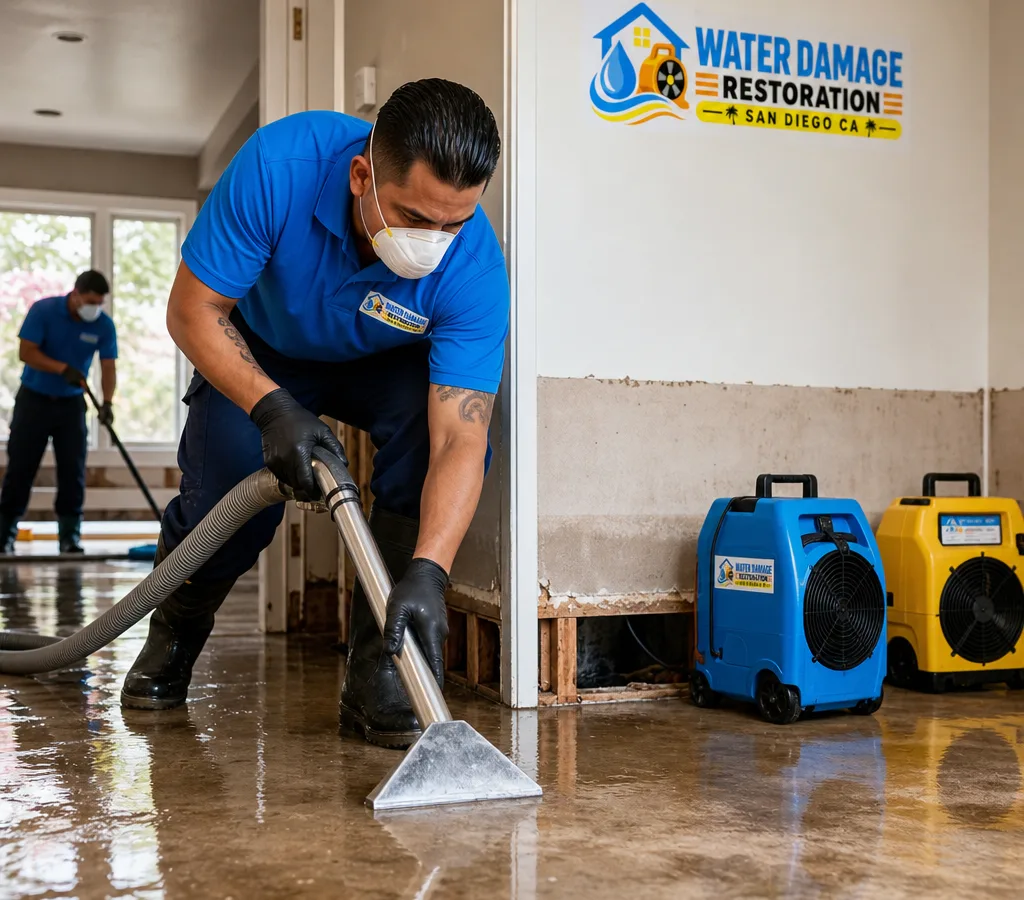
Pumping and extraction to remove standing water, plus targeted removal under flooring when water is trapped below the surface.
Serving San Diego, California & surrounding areas
24/7 Emergency Response
Flood restoration · San Diego, California
Fast cleanup, professional drying, and clear documentation to help limit damage and get your home or business back to normal.
Stabilize, extract, and dry
Flood restoration San Diego work needs to move quickly, but it also has to be done in the right order. Standing water can damage floors and drywall in hours, and trapped moisture can keep spreading behind baseboards, under cabinets, and into wall cavities.
Water Damage Restoration San Diego CA handles flood restoration for residential and commercial properties across San Diego. We focus on stabilizing the situation first (shutoffs, safety checks, and containment), then extracting water, drying the structure, and rebuilding what can't be saved. You get a written scope, progress updates, and a plan you can follow.
If your property has water in multiple rooms, a garage, crawl space, or a lower level, the goal is the same: remove water, control humidity, prevent secondary damage, and restore the affected materials to a safe, dry condition.
Complete cleanup through rebuild
Pumping and extraction to remove standing water, plus targeted removal under flooring when water is trapped below the surface.
Air movers and dehumidifiers set up based on room layout, material type, and moisture readings, not guesswork.
We track moisture in drywall, framing, and subfloors and adjust equipment placement as conditions change during the dry-out.
Flood-cutting drywall, removing wet insulation, lifting baseboards, and opening small access points so hidden moisture can dry.
Cleaning of affected surfaces and contents as appropriate, with extra caution when water is from outdoors or a backup.
After drying is verified, we restore the affected areas so you are not left with an unfinished, patchwork interior.
Local construction changes the dry-out
Flooding here can come from different sources, and the source changes the restoration plan. Coastal humidity can slow drying if the property isn't properly dehumidified and contained. Older homes and apartments in areas like North Park and Hillcrest often have lath-and-plaster or multiple remodel layers that hide moisture paths, so careful moisture mapping matters.
In neighborhoods with slab foundations and single-story layouts such as Clairemont, water can spread laterally across rooms and under continuous flooring. In Mission Valley and other low-lying areas near the San Diego River, stormwater intrusion can bring silt and debris that changes cleaning requirements.
We also coordinate around practical realities in San Diego: tight parking and shared walls in dense communities, HOA rules for equipment placement and noise, and staging work to keep tenants or family members safe while drying equipment runs.
Inspection through final repairs
We identify the water source, check for electrical and slip hazards, and confirm what materials are affected. If the water came from outside or a backup, we treat it as contaminated until proven otherwise.
We set up containment when needed to limit cross-contamination and protect HVAC returns, adjacent rooms, and common areas in multi-unit buildings.
We extract standing water, then determine what can be dried in place versus what needs removal (wet insulation, swollen particleboard, delaminated flooring, saturated drywall).
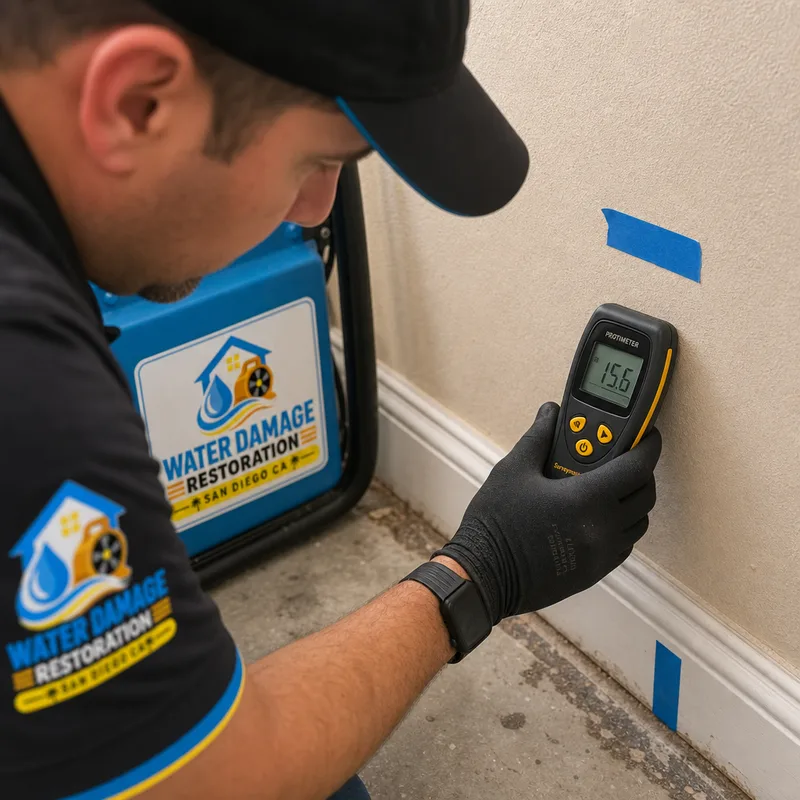
Air movers, dehumidifiers, and targeted airflow get placed based on the structure and moisture readings. We monitor humidity and temperature and adjust the setup as drying progresses.
Surfaces get cleaned and treated as appropriate. We verify dry standard with documented moisture checks before repairs begin.
We restore the affected finishes and complete a final walkthrough so you understand what was done and what was replaced.
Understanding the restoration scope
Flood restoration in San Diego typically ranges from $1,500 to $8,000+ for many residential jobs, with severe multi-room losses or contaminated water cleanup running higher. A small localized flood with drying-only work may land near the low end, while jobs needing demolition, mold prevention measures, and rebuild work move toward the top end.
Final cost depends on the amount of water, how long materials stayed wet, the type of flooring and wall assemblies, access to affected areas (crawl spaces, cabinets), and whether contents need specialized cleaning. Exact pricing is confirmed after an on-site inspection and moisture mapping.
“A storm pushed water into our living room and hallway. The team got the water out fast, set up drying the same day, and kept checking moisture until it was actually dry. The repairs matched our existing walls and baseboards.”
“We manage a small property and had a flood in a downstairs unit. They documented everything, communicated clearly with our tenant, and finished the rebuild without dragging the job out.”
Answers for property owners
Flood restoration should start as soon as it is safe to enter the property because water can wick into drywall and spread under flooring quickly. The sooner extraction and drying begin, the less likely you are to need large material removal and the easier it is to control odor and microbial growth.
Shut off the water source if it is a plumbing issue, avoid wet electrical areas, and keep people and pets out of flooded rooms. If you can do so safely, move small valuables and lift lightweight items off the floor. Avoid running household fans into wall cavities or under flooring without a plan, since it can push moisture deeper or spread contamination.
Some materials can be dried in place, but others need removal once they swell, delaminate, or trap moisture. Solid wood framing often dries well with proper dehumidification, while pad under carpet, particleboard cabinetry, and some laminates frequently require replacement after a flood. The decision is made from moisture readings, material type, and how long it stayed wet.
Many dry-outs take 3 to 5 days, but the timeline changes with humidity, the volume of water, and what assemblies are wet (for example, water under tile, behind cabinets, or in insulation). In coastal San Diego, controlling indoor humidity with dehumidifiers and containment can make a major difference in drying time.
Yes, we can provide written scopes, moisture documentation, and photos that support the work performed and the materials affected. Coverage depends on your policy and the water source, so we focus on clear, job-specific documentation that helps the claim process stay organized.
Water from outside, ground intrusion, or backups should be treated as contaminated until assessed because it can carry silt, bacteria, and other debris. That changes cleaning steps, PPE requirements, and what materials can be saved. We explain the category of water we are dealing with and what it means for the restoration plan.
If you are dealing with a flood, the most helpful next step is a fast on-site inspection with moisture mapping so you know what needs drying, what needs removal, and what the repair path looks like.
Request Emergency ServiceStart with a documented inspection
Tell us what happened and what areas are wet. We will walk the property, document the damage, and give you a clear scope for cleanup, drying, and restoration work.