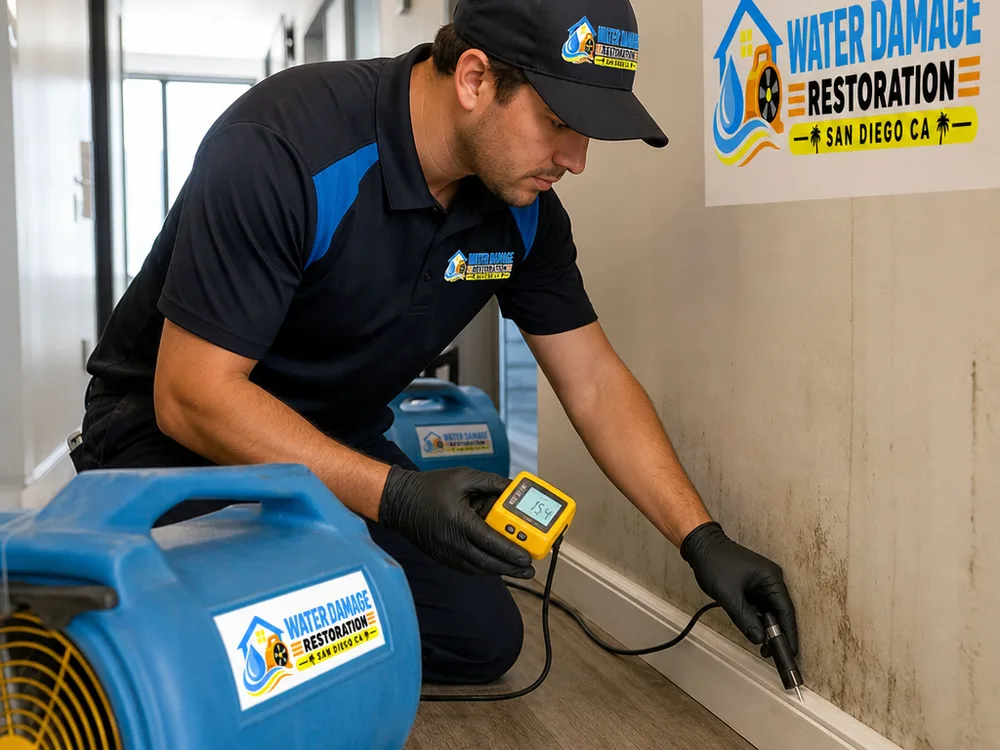
Moisture mapping, not guesswork
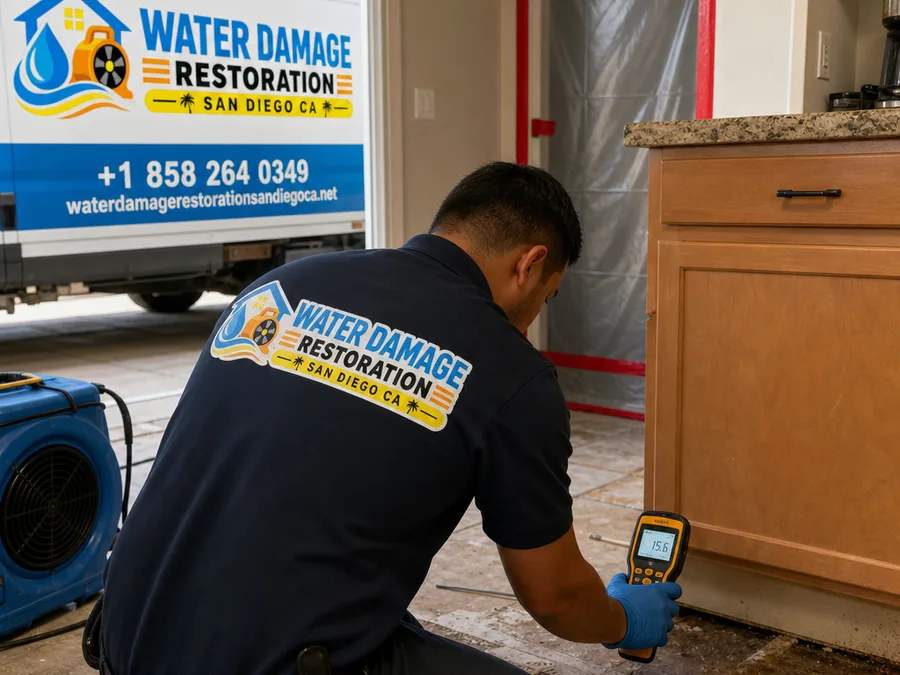
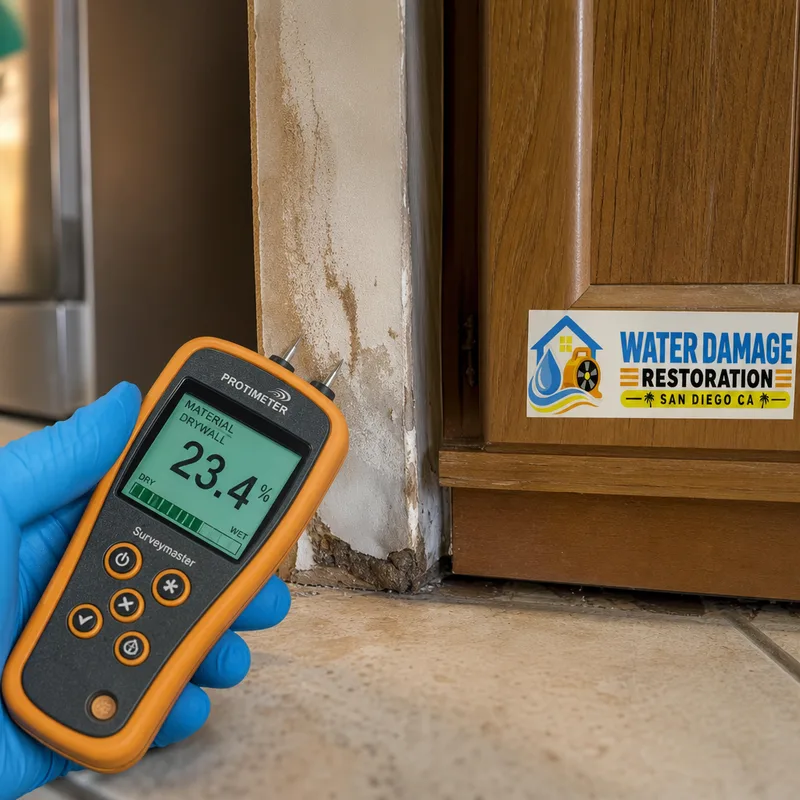
We use moisture meters and inspection tools to identify wet building materials, including areas that look dry but are holding water behind the surface.
Serving San Diego, California & surrounding areas
24/7 Emergency Response
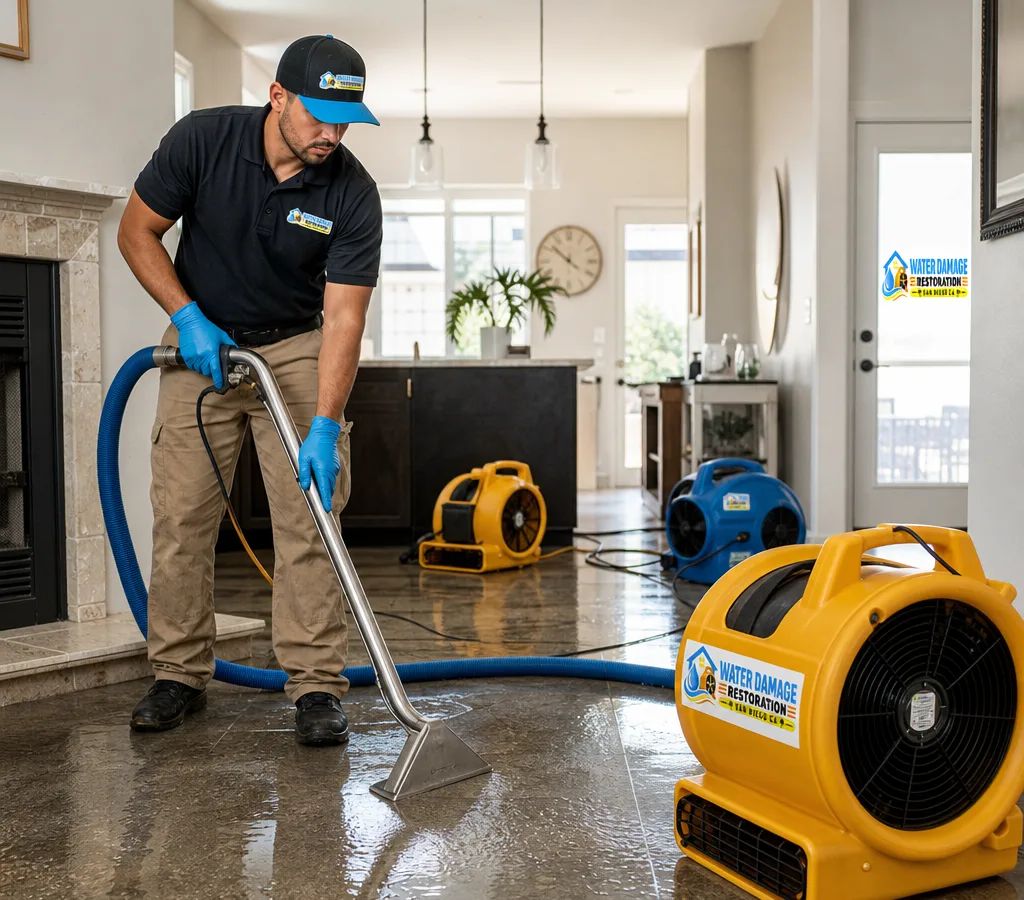
Water damage cleanup · San Diego, California
When water gets into drywall, flooring, or cabinets, time matters. We respond quickly, document what we find, and follow a clear dry-out plan to limit damage and get your space usable again.
Stop the spread first
If you are searching for water damage cleanup San Diego, you probably have one immediate goal: stop the damage from spreading. Water can move through baseboards, under floating floors, and into wall cavities long before it shows up as a stain.
Our team at Water Damage Restoration San Diego CA focuses on the practical steps that reduce loss: safe shutoff guidance, water removal, moisture mapping, controlled structural drying, and clear documentation of what was affected and what it takes to dry it. You will get a written scope, daily checks as needed, and a straightforward plan for the next phase once materials reach dry standard.
San Diego properties bring a mix of construction types and moisture challenges. Condos and apartments often share walls and plumbing chases, which can spread a leak beyond one unit. Older homes can have plaster walls and layered flooring systems that trap moisture. Coastal humidity can slow evaporation if the drying setup is not balanced correctly. The right approach is less about blasting heat and more about controlling airflow, temperature, and dehumidification based on measured moisture readings.
If you want an overview of related services and what we handle day to day, you can also review our water damage restoration service in San Diego for the broader scope.
A measured cleanup plan
We use moisture meters and inspection tools to identify wet building materials, including areas that look dry but are holding water behind the surface.
Removing bulk water first speeds everything up. Then we set air movers and dehumidifiers based on the room size, materials, and measured moisture levels.
We protect unaffected areas and isolate wet zones when needed, so airflow works for the dry-out and does not spread dust or odors through the property.
We document affected materials, readings, and progress so you have a record of conditions and a clear path to repairs once drying is complete.
Water events can involve plumbers, property managers, and insurers. We keep the work organized so each party has the details they need.
Measured for San Diego properties
Water damage cleanup is always situation-specific, but a few San Diego factors change how we set expectations and equipment.
In coastal neighborhoods like Point Loma and Ocean Beach, higher ambient humidity can make passive drying slow, especially when windows are opened to “air it out.” Dehumidification and measured airflow often matter more than outside air.
In Hillcrest and North Park, you will see a range of older homes and remodeled spaces with mixed materials: original plaster, newer drywall patches, layered subfloors, and tile installed over underlayment. Those assemblies can hold moisture in pockets, so we verify drying with readings at multiple points instead of relying on surface feel.
In Downtown and Mission Valley, condos and multi-unit buildings add the shared-wall factor. A leak above or next door can soak a wall cavity without obvious staining in your unit. When a manager needs to know whether the wet area stops at a fire-rated wall or continues into an adjacent space, moisture mapping and documentation become the difference between a targeted fix and repeated call-backs.
Across the county, hard-to-see water under LVP flooring, carpet pad, or cabinet toe-kicks is one of the most common reasons a small leak turns into a bigger repair. The earlier extraction and drying starts, the more options you usually have.
Source control through dry standard
If it is safe, we help you identify immediate shutoffs and isolate the affected area. If the source is still active, cleanup cannot be effective until it is controlled by the appropriate trade.
We check visible damage and likely migration paths under flooring, behind baseboards, around cabinets, and in adjacent rooms. Then we record moisture readings to define the wet footprint.
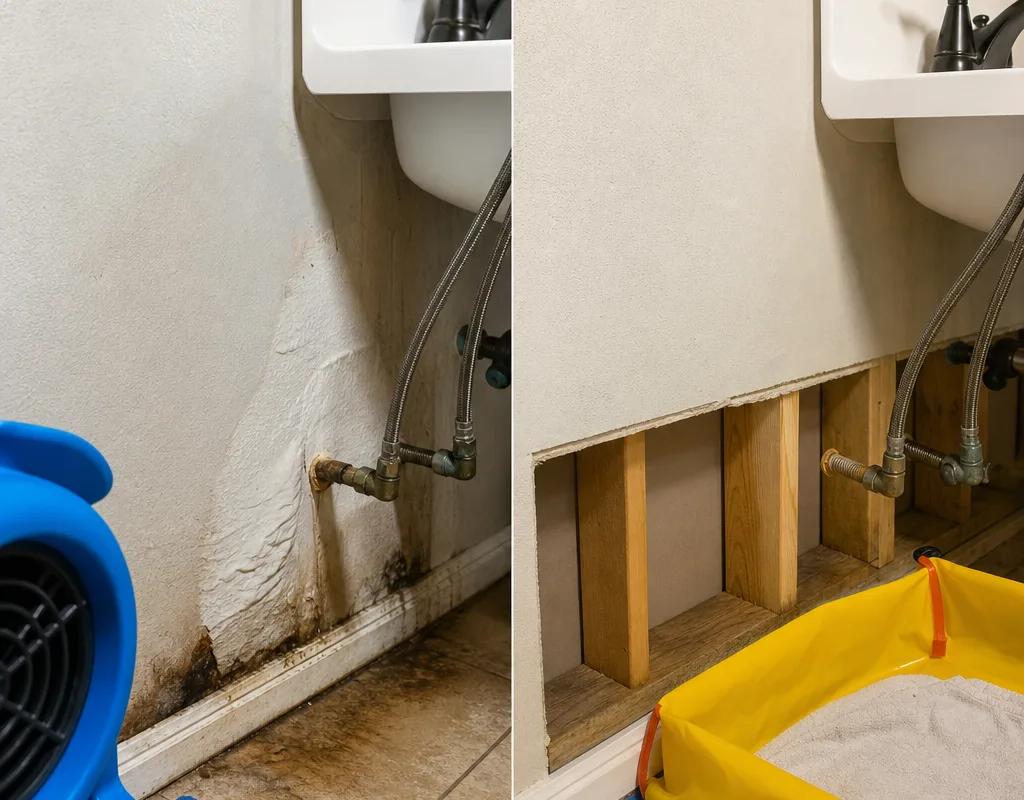
We extract standing water and remove unsalvageable materials when needed. Some assemblies can dry in place; others trap water and need selective removal to dry correctly.
Air movers and dehumidifiers are placed to create controlled airflow and moisture removal. We adjust the setup based on room conditions and material response, not a one-size layout.
We re-check moisture levels and track progress. Once materials reach dry standard, we provide documentation and discuss what repairs are next to return the space to pre-loss condition.
Understanding the cleanup scope
Water damage cleanup in San Diego typically ranges from about $900 to $4,500 for a straightforward leak with extraction and drying, while larger losses that require demolition, multiple rooms, or extended drying can run $6,000 to $15,000+.
Your price depends on the amount of standing water, how far moisture traveled—including wall cavities and under flooring—contamination category, access in multi-story or tight condo settings, the number of drying days, and what materials must be removed and disposed of. The exact cost is confirmed after an on-site inspection and moisture mapping.
Documented field work
Answers for a safer dry-out
Start water damage cleanup as soon as the water source is stopped and the area is safe, ideally the same day. Moisture spreads under flooring and into drywall quickly, and earlier extraction plus controlled drying usually reduces how much material has to be removed.
Sometimes, yes, but only if moisture readings show the assembly can dry effectively in place. Drying trapped moisture under impermeable flooring or inside insulated wall cavities often requires selective removal to prevent prolonged damp conditions and to allow airflow where it matters.
Clean water (Category 1) starts as sanitary supply-line water, while contaminated water includes gray water (Category 2) and sewage (Category 3). The category affects safety measures, cleaning steps, and what materials must be discarded because porous materials exposed to sewage generally cannot be safely salvaged.
Many drying jobs take about 3 to 5 days, but the timeline depends on how saturated the materials are, the affected square footage, and the type of construction. In San Diego, coastal humidity can also slow evaporation if the dry-out is not properly dehumidified and monitored.
Yes, we can provide the documentation insurers typically ask for, including moisture readings, affected materials, and drying equipment logs when applicable. Coverage depends on your policy and the cause of loss, so it helps to report the claim early and keep any plumber notes or photos of the source.
If it is safe, stop the water at the nearest shutoff and avoid using electrical outlets in wet areas. Move small valuables out of the wet zone, blot or extract what you can without spreading water, and avoid running household fans randomly if it pushes moisture into adjacent rooms; controlled airflow works best when it is set up based on the wet footprint.
Start with measured moisture
Tell us what happened and where the water is showing up. We will walk you through immediate next steps, schedule an inspection, and provide a written scope based on moisture readings so you can move forward with confidence.