Water removal and controlled dry-out
We extract standing water, set drying equipment, and track progress with moisture readings so materials are dried to an appropriate level before rebuild decisions are made.
Serving San Diego, California & surrounding areas
24/7 Emergency Response
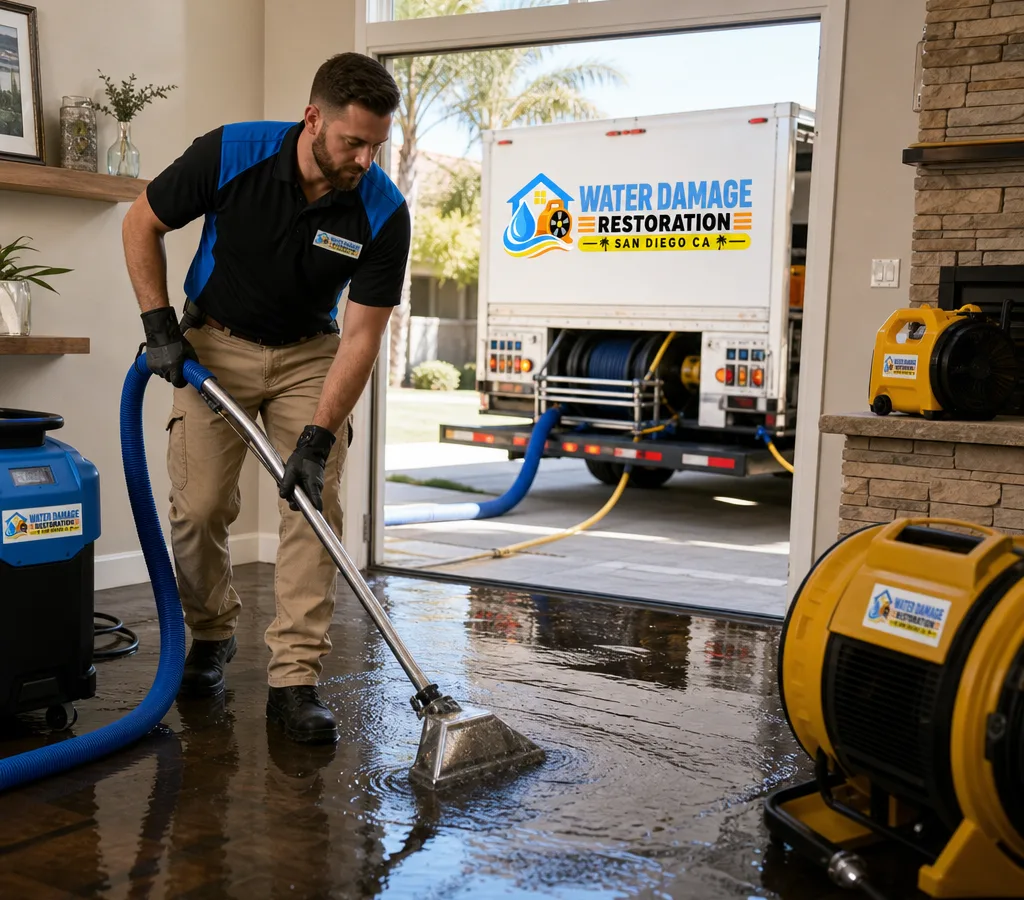
Flood cleanup · San Diego, California
When water gets in, minutes matter. We respond fast, remove standing water, dry the structure safely, and document the work so you can move forward with a clear plan.
Act quickly and dry completely
If you are searching for san diego flood clean up, you are probably looking at wet floors, soaked drywall, and a lot of uncertainty about what comes next. Floodwater spreads under flooring, wicks up walls, and can leave moisture trapped in cavities even after the visible water is gone.
Our job is to stop the damage from growing. That starts with a rapid assessment and water removal, then controlled drying and dehumidification, and finally cleanup and restoration planning based on what materials can be saved.
San Diego homes and buildings vary a lot, and that affects the approach. Condos and apartments in Downtown and Little Italy often have shared walls and HOA rules that require tight coordination and clear documentation. Older homes around North Park and Hillcrest can have multiple flooring layers and plaster that hold moisture differently than modern drywall. Coastal areas like Ocean Beach can add higher ambient humidity, which makes proper dehumidification and monitoring more important than just placing fans.
Water Damage Restoration San Diego CA handles residential and commercial flood cleanup san diego property owners can rely on when they need a straightforward scope, clean work practices, and drying that is verified, not guessed.
Measured drying and cleaner recovery
We extract standing water, set drying equipment, and track progress with moisture readings so materials are dried to an appropriate level before rebuild decisions are made.
Flooded debris, saturated carpet pad, and compromised drywall are handled with containment and disposal practices that keep the rest of the property cleaner.
Drying speed, airflow design, and dehumidification are planned to prevent hidden damp zones that can turn into odor or growth later.
Photos, readings, and a written scope help property owners, building managers, and insurers understand what was affected and what steps were taken.
We protect pathways, keep equipment organized, and communicate what will be noisy, what will be moved, and what is safe to use during drying.
Find the water you cannot see
Effective flood cleanup in San Diego is more than removing water and hoping the rest dries out. The hard part is what you cannot see: water under baseboards, behind cabinets, and inside wall cavities.
A typical professional workflow includes:
If you are also comparing broader recovery help beyond flooding, our water damage restoration in San Diego work covers the full range of water-related property damage with the same measured, documented approach.
Assessment through restoration planning
We inspect affected rooms, note where water traveled, and set a plan for containment, equipment staging, and safe access for occupants or staff.
Standing water is extracted first. Then we remove saturated pad, compromised drywall, or wet insulation when drying in place is not realistic or sanitary.
We create airflow paths, set dehumidifiers, and adjust for the building layout. In multi-unit buildings, we pay close attention to shared walls and adjacent spaces.
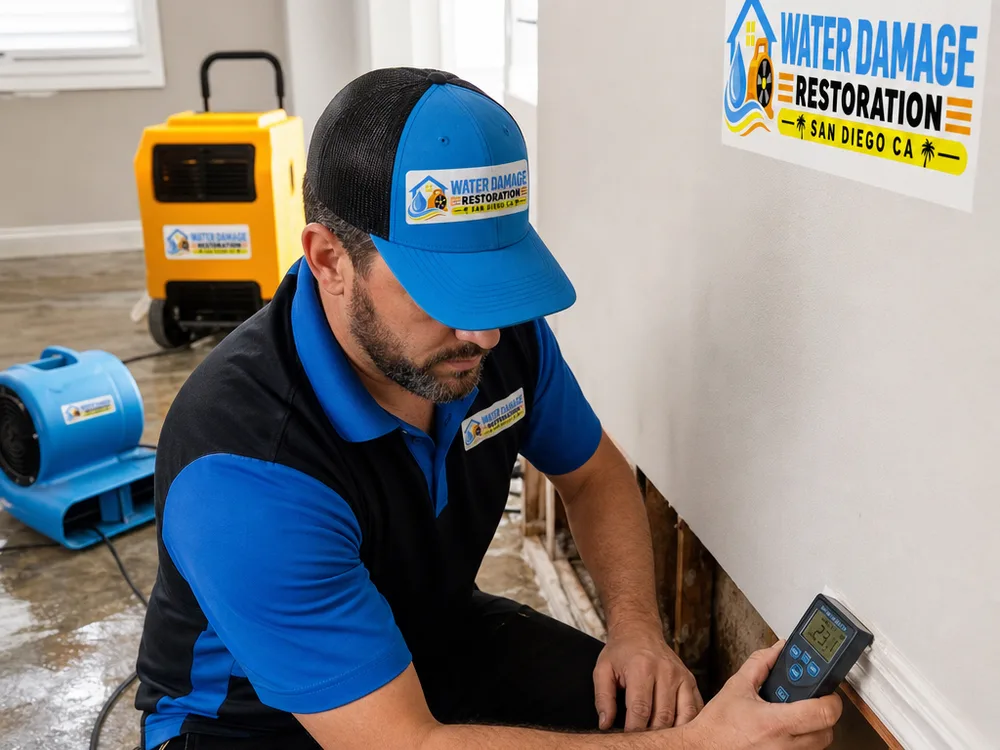
We check moisture levels, reposition equipment as needed, and document progress so you know what is drying and why the timeline looks the way it does.
Once drying targets are met, we outline next steps for repairs and finishes so you can schedule reconstruction with fewer surprises.
Understanding the cleanup scope
Flood cleanup in San Diego typically ranges from about $900 to $6,000+, with small, clean-water incidents at the low end and larger losses involving multiple rooms, saturated drywall, or contaminated water at the high end. A simple extraction and a short dry-out may be $900 to $2,500, while multi-day drying with selective demolition and detailed monitoring is often $2,500 to $6,000+.
Final price depends on the amount of water, how far it spread, what materials are affected—carpet, hardwood, drywall, or insulation—access such as stairs, parking, and multi-unit rules, and whether the water is contaminated. The exact scope and cost are confirmed after an on-site inspection and moisture mapping.
“We had water come in fast during a storm and it got under the flooring in two rooms. The crew explained what had to come out, started extraction right away, and kept checking moisture until it was actually dry. The documentation made the insurance side much easier.”
“Our office had a weekend leak that spread into adjacent suites. They contained the wet area, set equipment so we could keep operating, and gave us a clear plan for repairs once drying was done.”
Answers before cleanup begins
In many cases we can begin same-day, depending on current demand and site access. Quick extraction and early drying are the biggest factors you can control, so we prioritize getting eyes on the damage, stopping spread, and starting a drying plan as soon as practical.
Often you can stay in the home if the affected area is contained and utilities are safe, but it depends on how much of the property is wet and whether contaminated water is involved. We walk through what rooms can remain in use, what will be noisy, and what needs to stay off-limits during drying.
If it is safe, shut off the water source, avoid using electrical outlets near wet areas, and move small valuables and electronics to a dry room. Do not run HVAC if it is pulling air from a soaked area, and avoid peeling baseboards or opening walls unless you are sure you can do it safely without spreading contamination.
Not always, but drywall and insulation often require selective removal when they are saturated, contaminated, or trapped behind cabinets where airflow cannot reach. We make that decision based on water category, how high the moisture has wicked, and whether we can dry the assembly effectively with controlled airflow and dehumidification.
Yes. Multi-unit flood cleanup usually needs extra coordination because water can migrate into shared walls or units below, and access can be limited by parking, elevators, or HOA rules. We document affected areas and moisture readings to support communication with building management and neighboring units.
Coverage depends on the source of the water and your specific policy. Many policies treat sudden interior leaks differently than exterior flooding. We provide photos, moisture documentation, and a clear scope so you have the information needed to file a claim and answer adjuster questions.
If you have standing water, wet flooring, or swelling drywall, getting a documented drying plan early can prevent bigger repairs later and helps you make clean decisions about what to save and what to remove.
Call for Emergency HelpStart water removal and drying
Tell us what happened and what areas are affected. We will assess the damage, explain the next steps, and start water removal and drying with clear documentation from day one.