
Slab and subfloor leaks
Moisture mapping and localized listening help narrow down leaks under slab foundations or beneath finished flooring, where symptoms often show up far from the break.
Serving San Diego, California & surrounding areas
24/7 Emergency Response
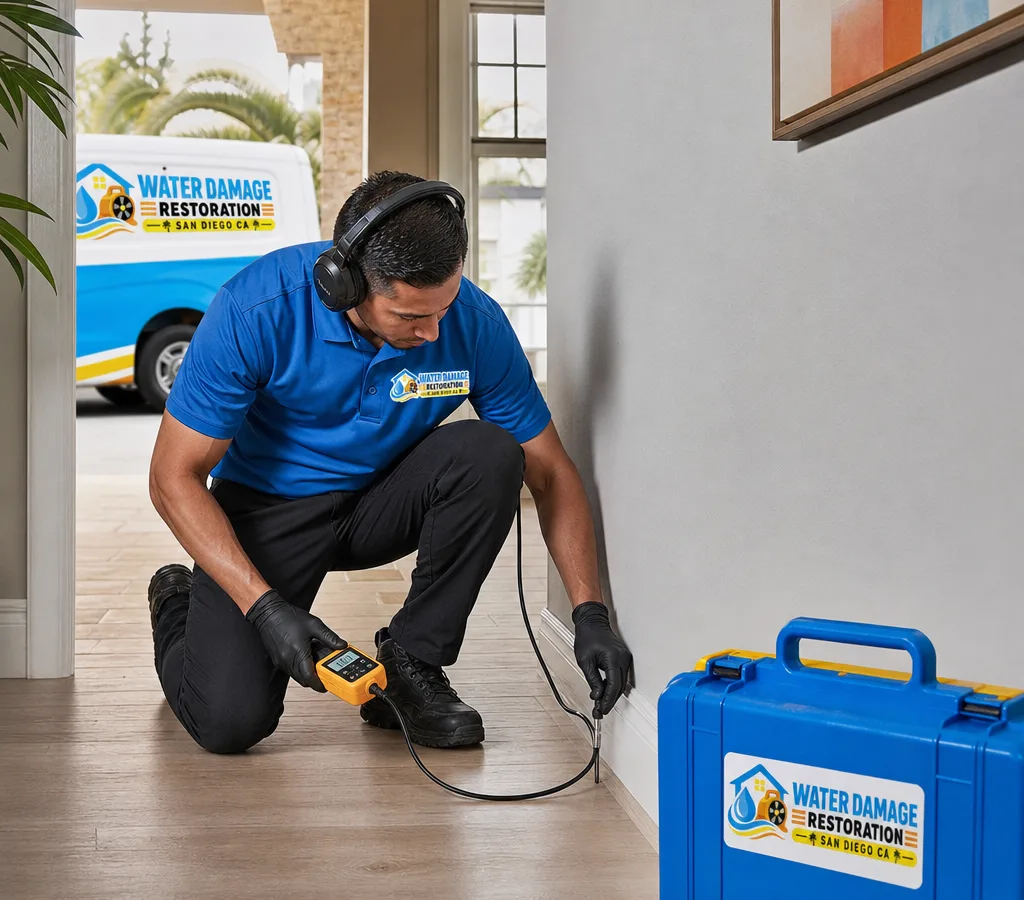
Water leak detection · San Diego, California
If you suspect a hidden leak, we pinpoint the source with non-invasive tools, document what we find, and help you choose the safest next step before damage spreads.
Locate the source before opening finishes
San Diego water leak detection is for the problems you cannot solve by looking under a sink with a flashlight: a water bill that jumps, warm spots on a slab, a musty odor that keeps coming back, or moisture showing up where there is no plumbing fixture.
Our technicians focus on locating the leak with as little disturbance as possible. That usually means mapping moisture, listening for active water movement in supply lines, and narrowing the area until the source is confirmed. You get clear findings you can act on, whether the next step is a plumber repair, targeted opening of a wall or ceiling, or drying and cleanup.
Water Damage Restoration San Diego CA serves San Diego, CA, including the 92103 area, with leak locating that is built around accuracy, documentation, and practical next steps. If you end up needing cleanup after a leak, our broader water damage restoration in San Diego service can support drying, monitoring, and coordination once the water is stopped.
Evidence for a targeted repair
Moisture mapping and localized listening help narrow down leaks under slab foundations or beneath finished flooring, where symptoms often show up far from the break.
We trace moisture migration to find the highest wet point and likely entry path, which helps separate a plumbing leak from a roof or window intrusion.
Acoustic tools and pressure behaviors can indicate an active leak even when the water is not visibly pooling, a common cause of steady bill increases.
Drain leaks often present as intermittent moisture or odor. We look for patterns tied to fixture use and confirm affected areas so repairs can be targeted.
Outdoor lines can waste significant water without obvious surface pooling. We check for abnormal saturation near runs and valves before you start digging.
Condos and duplexes can have confusing water paths. We document moisture boundaries to support conversations with neighbors, property managers, or plumbers.
Confirm the source, not just the wet spot
San Diego housing ranges from older homes with multiple generations of repairs to newer builds with complex manifolds and fixtures. Either way, the goal is the same: confirm the source, not just the wet spot.
We typically start by gathering the symptoms: when you first noticed moisture, whether the issue is constant or intermittent, which fixtures were used, and whether the water meter behavior suggests an active leak. We then:
This approach is especially helpful in neighborhoods with a mix of older and remodeled properties like North Park and Hillcrest, where prior renovations can hide plumbing paths behind new finishes. In areas with many slab-on-grade homes, such as parts of Clairemont, warm or damp spots on flooring can be an early clue that needs confirmation before a repair is scoped.
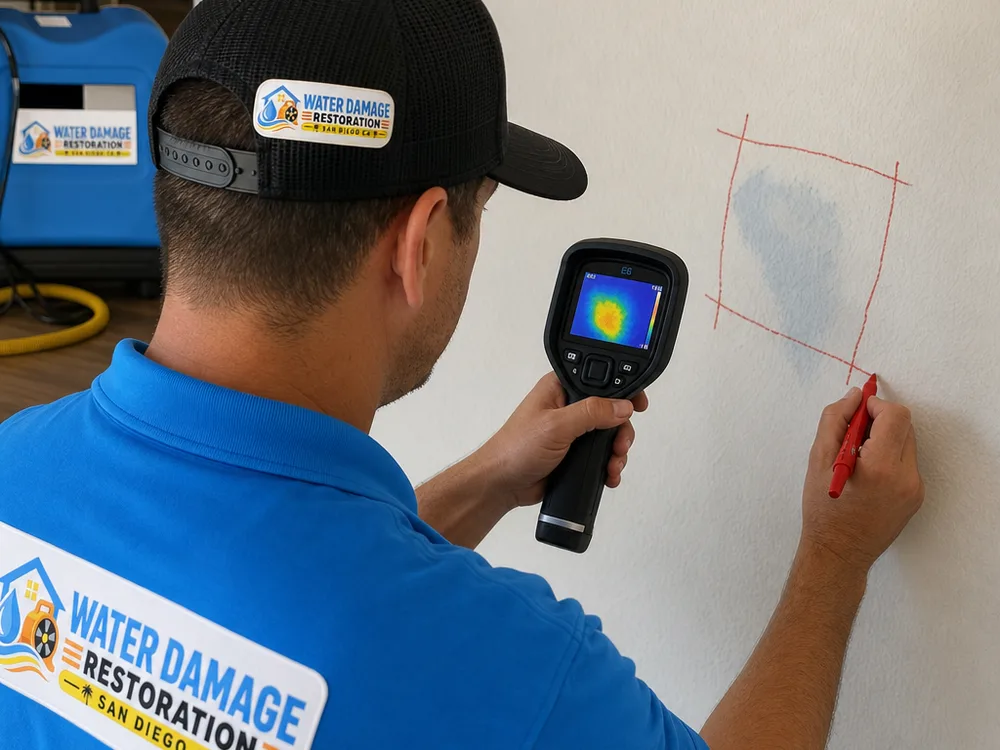
Symptoms through documented findings
We gather what you have seen and heard: water bill changes, wet spots, odors, fixture use patterns, and any prior repairs. This shapes the testing plan.
We use moisture meters, thermal imaging where appropriate, and acoustic tools for pressurized lines. The goal is to narrow to a specific location or segment.
We distinguish between supply, drain, and intrusion patterns based on readings, building layout, and how the moisture spreads. When possible, we identify the exact point to access.
You get a clear explanation of what we found, what remains uncertain, if anything, and what a plumber or repair crew should do next to fix it with minimal disruption.
If drywall, flooring, cabinetry, or insulation has elevated moisture, we can outline a drying and monitoring plan after the leak is repaired to help prevent secondary damage.
Planning the diagnostic visit
San Diego water leak detection typically ranges from about $250 to $850 for most residential diagnostics, depending on the type of leak and how long it takes to isolate. A straightforward pressurized line locate is often on the lower end, while multi-level tracing, slab-related symptoms, or intermittent drain leaks usually cost more.
Final pricing depends on access, how much of the system must be tested, whether multiple suspected areas need mapping, and whether documentation is needed for a property manager or insurer. The exact cost is confirmed after we review the symptoms and conditions at the service visit.
“We had a sudden jump in our water bill and could not find anything obvious. They traced it quickly, explained what the readings meant, and marked the area so the plumber only opened a small section of wall.”
“Moisture kept showing up near the baseboard and we were worried it was a bigger issue. The inspection made it clear where the water was coming from and what to fix first.”
Answers before testing begins
You need leak detection when the source is not visible or the symptoms do not match the nearest fixture. If a shutoff, supply valve, or trap is clearly dripping, a plumber can usually repair it right away; if you have wet floors, wall staining, unexplained humidity, or a rising water bill with no obvious drip, a locating visit can prevent opening the wrong area.
Often, yes, we can narrow a slab leak to a specific area using moisture mapping and acoustic listening on pressurized lines before any concrete is cut. Some situations still require a plumber to expose the line for final confirmation and repair, but good detection typically reduces the size of the opening and the number of test holes.
If you can do it safely, avoid running water and note when the last fixtures were used, then clear access to the areas where you see symptoms. If you suspect an active supply leak, shutting off the home's main water can limit further damage, and taking photos of visible moisture can help document what changed over time.
Yes, we can document observations, affected areas, and the basis for our conclusions so you have a clear record of what was found. If drying is needed after the leak is repaired, that same documentation supports a consistent plan for equipment placement and moisture monitoring.
Most residential leak locating takes 1 to 3 hours, depending on the size of the home and whether the leak is constant or intermittent. Slab symptoms, multi-story tracing, or drain-related issues can take longer because the moisture path must be verified across multiple surfaces and rooms.
Yes, once the water source is stopped, we can guide the next steps for drying and monitoring to reduce the chance of damage spreading into drywall, flooring, or cabinetry. If the situation calls for broader cleanup, our team can coordinate the timeline so drying starts promptly after repairs.
Pinpoint the source before damage spreads
Tell us what you are noticing, and we will schedule a leak detection visit to pinpoint the source and lay out a clear plan for repair and any needed drying.