
Inspection and scope you can understand
We identify likely moisture sources, map the affected materials, and explain what must be removed versus what can be cleaned and treated.
Serving San Diego, California & surrounding areas
24/7 Emergency Response
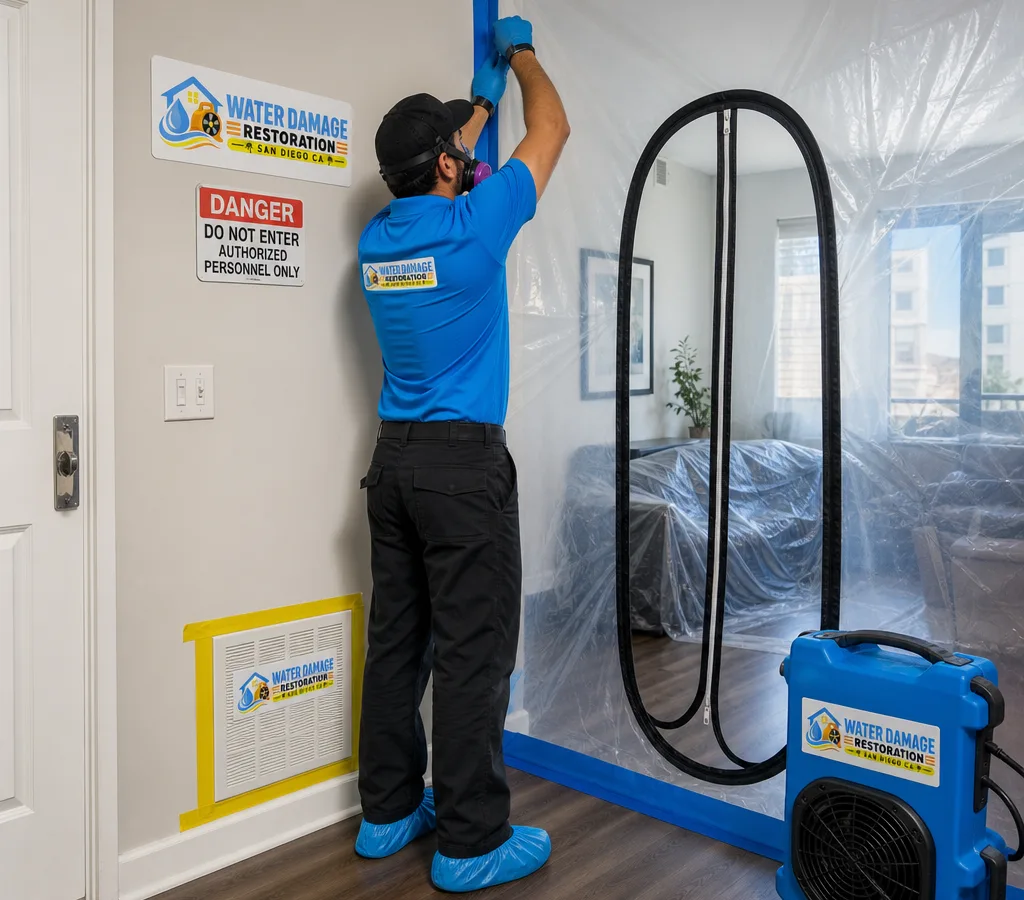
Mold removal · San Diego, California
If you smell musty odors, see staining, or have had a recent leak, we contain the area, remove affected materials safely, and clean and verify the space so you can get back to normal with confidence.
Contain the area and correct the moisture
Mold problems in coastal San Diego often start the same way: a slow plumbing leak under a sink, a roof or window intrusion after rain, or moisture trapped behind drywall where you cannot see it. If you are searching for mold removal in San Diego, you usually want two things fast: to stop the spread and to make the air in the building feel normal again.
Our mold removal work focuses on practical containment and careful cleanup. That means isolating the work area, controlling airflow with negative pressure when needed, removing materials that cannot be cleaned, and detailed cleaning of surfaces and contents that can be saved. We then confirm conditions are dry and the workspace is clean before we break containment.
In neighborhoods with older housing stock like North Park and Hillcrest, we often find moisture intrusion around bathrooms, kitchens, and aging window openings where repeated small leaks feed growth inside wall cavities. In coastal areas like Pacific Beach and Ocean Beach, higher ambient humidity and salty air can make musty odor complaints more noticeable, especially in closets and poorly ventilated corners. Downtown and Mission Valley properties frequently have shared walls, mechanical chases, or multi-unit layouts where strict containment matters to protect neighboring spaces.
A controlled remediation workspace
Effective mold remediation is a controlled jobsite, not a quick wipe-down.
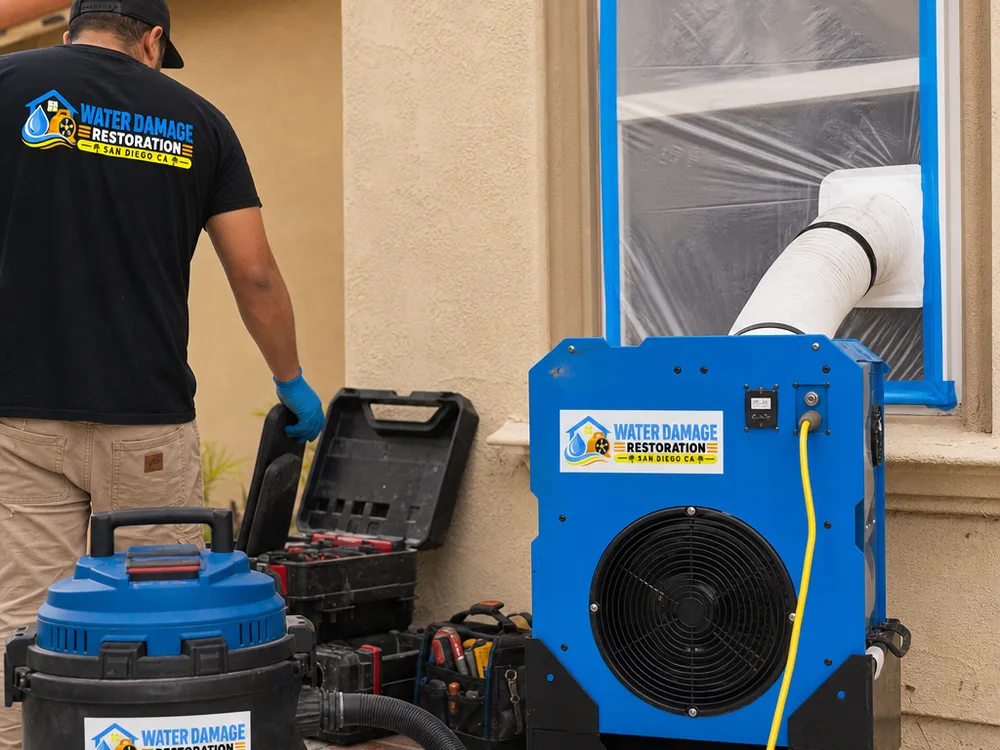
A standard professional setup often includes:
If you have had a leak or overflow and are sorting out next steps, the fastest path is usually to identify and stabilize the moisture source, then move into remediation. Broader drying and cleanup may run in parallel when materials are wet or recently saturated.
If you are unsure whether you need full containment, we can walk through the building use, location of growth, and whether sensitive occupants change the plan.
From containment through repair handoff
We identify likely moisture sources, map the affected materials, and explain what must be removed versus what can be cleaned and treated.
We isolate the work zone with plastic barriers and controlled entry, scaling up to negative pressure and HEPA filtration when conditions call for it.
Drywall, insulation, baseboards, or flooring that cannot be restored are removed in a controlled way to limit spread through the home or unit.
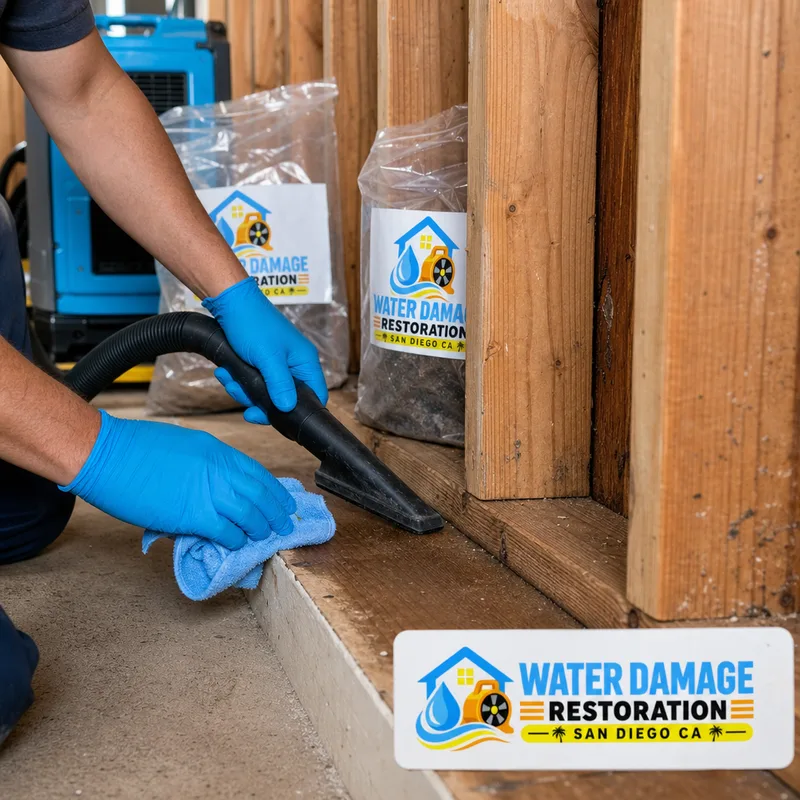
We HEPA vacuum and clean remaining framing and surfaces, focusing on cracks, corners, and other dust-trapping details that affect odor and re-growth risk.
Materials are dried to appropriate levels before rebuild steps begin, because paint and new drywall over damp surfaces can recreate the problem.
You get a clear summary of what was removed and what conditions need to stay controlled so repair work can proceed without reintroducing moisture.
Evaluation through clean handoff
We look at visible growth, staining, and odor areas, then check likely moisture pathways. The goal is to understand how the problem started, not just what you can see.
We protect floors and set containment barriers. When warranted, we run negative air with HEPA filtration to keep the work area controlled.
We remove porous materials that cannot be effectively cleaned. Everything is bagged and handled to reduce tracking debris through living areas.
We clean remaining surfaces and structural components. The objective is to remove contamination from surfaces, not mask it with fragrance or paint.
We confirm remaining materials are dry enough to close up. If equipment is needed, airflow is planned so it does not push particles into clean areas.
We review what was done and what conditions to maintain. If repairs are pending, we coordinate the handoff so walls are not closed prematurely.
Planning the remediation scope
Mold removal in San Diego typically ranges from about $1,500 to $6,500 for many residential projects, with small, contained areas sometimes closer to $800 to $2,000 and larger or multi-room remediation reaching $8,000 to $15,000+. Cost depends on the square footage and accessibility, how much drywall or flooring must be removed, whether negative air containment is required, and whether drying and odor cleanup are needed.
The exact price is confirmed after an on-site inspection and a written scope that matches what the building actually needs.
Controlled work in real properties
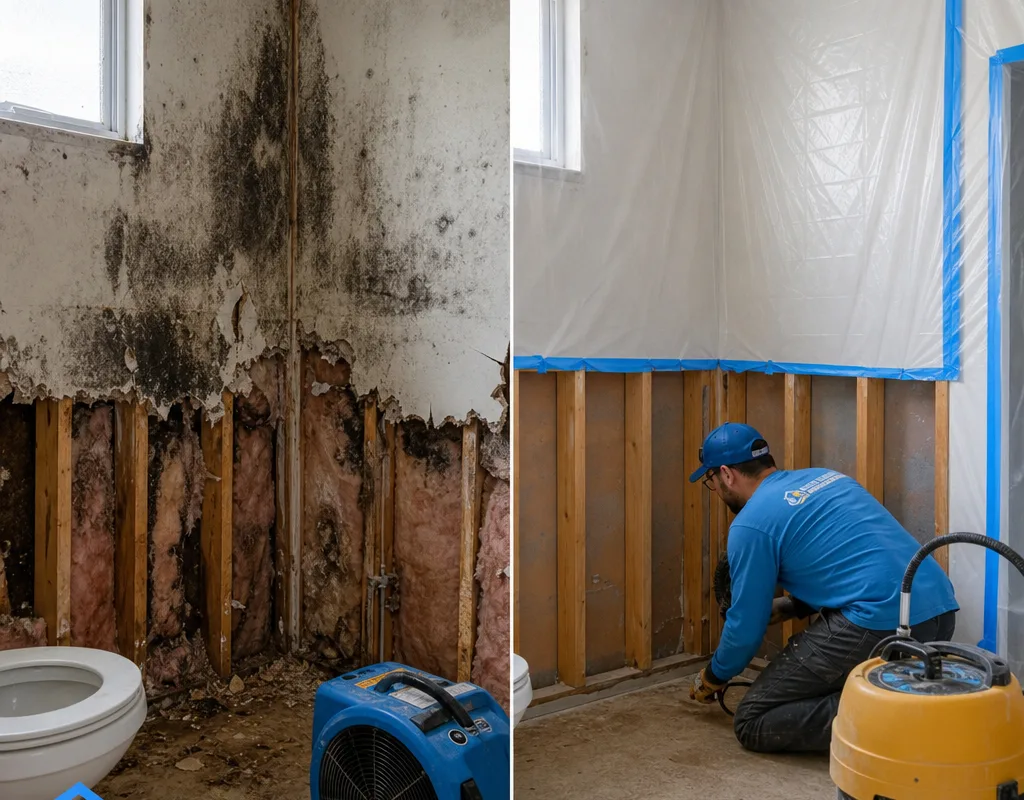
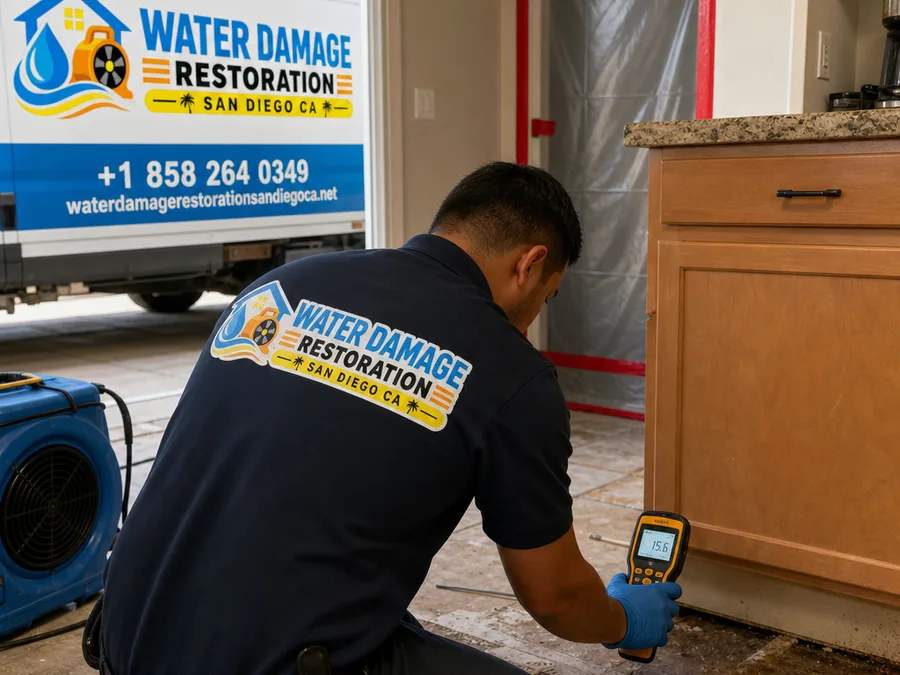
“We had a musty smell that kept coming back in a downstairs bedroom. The team found moisture behind the baseboard, set up containment, removed the damaged drywall, and cleaned everything thoroughly. The house smelled normal again after the work and the walkthrough was straightforward.”
“Our property manager needed a remediation plan that would not affect neighboring units. The containment and air control setup looked professional, and they kept the common areas clean during debris removal.”
Answers before containment begins
Many mold remediation jobs take 1 to 3 days of on-site work, but the full timeline depends on how much material must be removed and whether drying is needed before closing walls. In San Diego, projects can extend when moisture is trapped behind tile, cabinets, or multiple layers of drywall.
Porous materials like drywall and insulation usually need removal when visibly affected or wet long enough to support growth. Non-porous and semi-porous surfaces can often be cleaned when the moisture source is corrected and the structure can be dried and verified.
Mold can return if moisture returns, so the long-term fix is controlling the water source and keeping materials dry. Preventing recurrence may depend on plumbing, flashing, window-sealing repairs, and ventilation habits, especially in bathrooms and coastal areas.
It depends on the location and extent of work and occupant sensitivity. Many projects can proceed while parts of a home remain occupied, but access to the work zone is restricted and temporary relocation may be appropriate for sensitive occupants or main living-space projects.
Air or surface testing can help in some situations, but remediation decisions are often driven by visible conditions, moisture evidence, and affected materials. If testing is desired, sampling should be planned around a defined question such as clearance, baseline comparison, or locating a hidden issue.
Keep the area as undisturbed as possible and avoid fans that could push particles into other rooms. If safe, stop the water source and note when the leak or odor was noticed. In multi-unit buildings, coordinate access and any staging rules.
Contain the problem and move forward clearly
Tell us what you are seeing (odor, staining, recent leak, or a failed DIY cleanup) and where it is in the property. We will recommend the right level of containment, provide a clear scope, and help you move forward without guessing.